62% of Canadians Want Tiny Homes and Modular Housing, But Builders Can't Finance Them
Canadians Want Tiny Homes and Modular Housing, But Builders Can't Finance Them
Sixty-two percent of Canadians surveyed by Meridian Credit Union in 2026 said they would consider co-housing, intergenerational living arrangements, or factory-built modular homes if it meant owning property sooner.[1] The shift is measurable, documented, and tracks closely with the timeline of interest rate increases that began in 2022. What was niche has become mainstream pragmatism.
Lenders treat these structures like experimental products rather than housing stock. Banks appraise modular homes against thin comps, worry about smaller resale markets, and price construction financing for small-to-mid-sized builders at 5.95% to 6.95% as of mid-2026, a full point above conventional multi-family developments. The result keeps supply off the market at exactly the moment it's needed most.
Why lenders won't touch modular builds
A modular home is a dwelling built in sections at a factory, transported to a site, and assembled on a foundation. The manufacturing process is faster than stick-built construction, material waste is lower, and quality control happens in a controlled environment rather than outdoors in variable weather. These are advantages a rational lender would price favourably.
Instead, most Tier-1 Canadian banks treat modular homes as higher-risk assets. The appraisal comps are thin because the housing stock is still dominated by traditional builds. The resale market for modular units is smaller, which makes the collateral harder to liquidate if the borrower defaults. Construction financing rates for small-to-mid-sized builders working on modular projects sit in the 5.95% to 6.95% range as of mid-2026, a full point above conventional multi-family developments in many cases.
The result: builders who want to deliver modular housing at scale cannot access the capital to do it, even when pre-sales or municipal partnerships de-risk the project.
The credit union gap
Credit unions have stepped into the void, but their balance sheets are smaller. A builder planning 40 modular units on a municipally approved site can often get financing from a credit union where a bank would decline. The trade-off is higher rates, shorter terms, and loan-to-cost ratios that require the builder to front more equity.
For a mid-sized developer, that equity requirement is the bottleneck. A project that pencils out at 75% loan-to-cost becomes unviable at 65%. The builder either shelves the plan or pivots back to conventional construction, where the financing is predictable even if the timeline is longer.
What breaks when policy moves faster than lenders and municipal utilities
Municipal zoning reforms across Toronto, Vancouver, and other cities now allow garden suites, laneway houses, and small apartment blocks on lots previously restricted to single detached homes. The Housing Accelerator Fund has pushed hundreds of municipalities to rezone for density, and many have complied. The regulatory path is open.
The sewage, water, and electrical grids in those neighbourhoods were not designed for the density the new zoning permits. Upgrading the sewer lateral, water main, and electrical service is a municipal expense that does not show up in housing supply projections but determines whether the supply can actually be built. A laneway house approved on paper in 2026 might wait two years for a sewer lateral upgrade before construction starts.
Builders working on alternative housing often face the same municipal approval timelines as traditional projects, which erases the speed advantage that made modular attractive in the first place. A factory-built home delivered in six weeks still waits four months for a building permit.
The 3.5 million gap
The Canada Mortgage and Housing Corporation estimated in 2023 that Canada needs 3.5 million additional units beyond business-as-usual construction by 2030 to restore affordability. Updated projections in early 2026 suggest the gap could reach 4.69 million homes by 2036 if construction slows.
Tiny homes, modular builds, co-housing, and other alternative housing models can be built faster and often at lower cost than traditional homes. They are a necessary part of closing the gap. Demand is documented. Builders are ready.
The financial system has not caught up to the housing crisis it helped create. Banks are cautious. Credit unions have smaller balance sheets. Municipal water and sewer systems are undersized. These are the actual constraints.



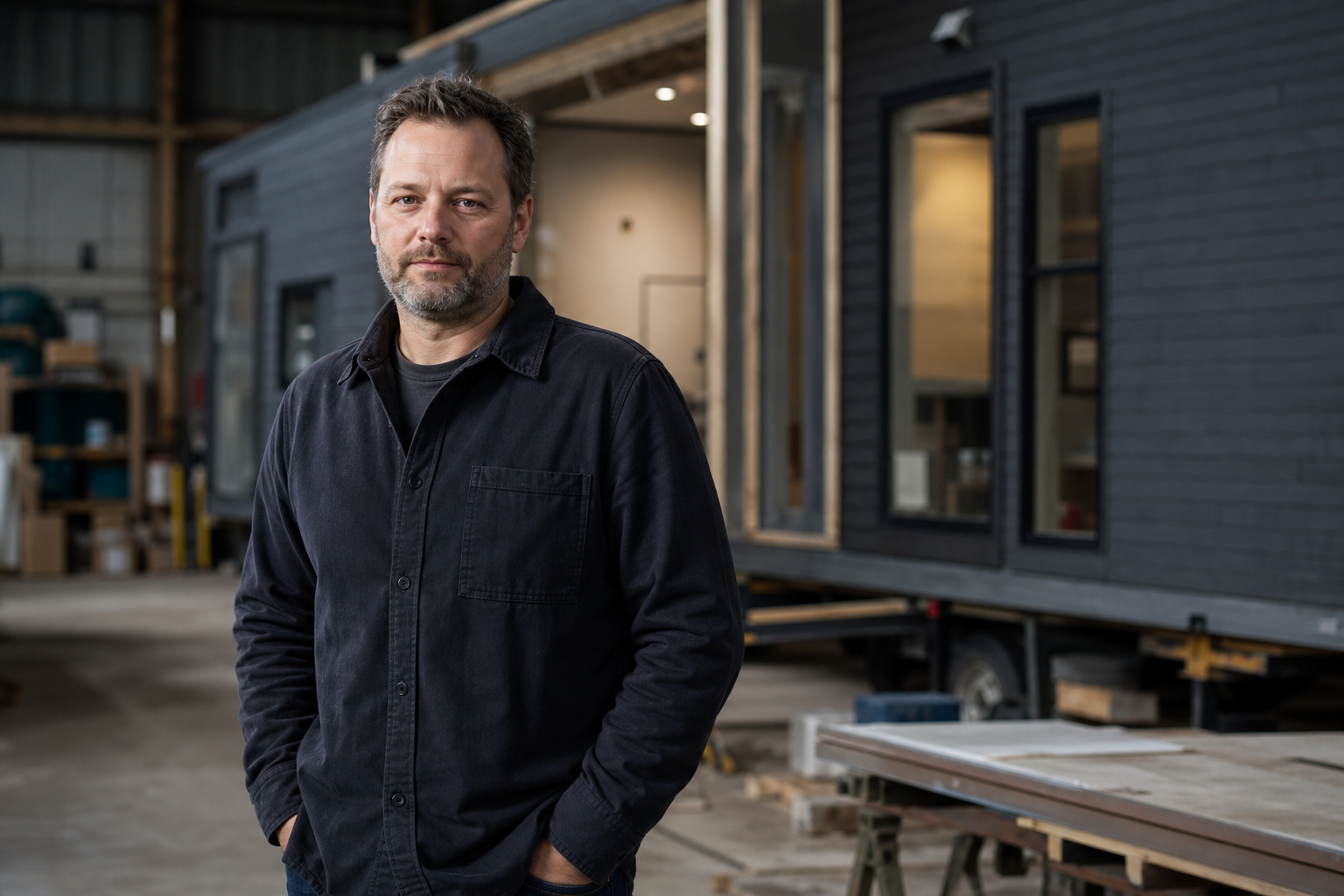

Canadians Want Tiny Homes and Modular Housing, But Builders Can't Finance Them
Sixty-two percent of Canadians surveyed by Meridian Credit Union in 2026 said they would consider co-housing, intergenerational living arrangements, or factory-built modular homes if it meant owning property sooner.[1] The shift is measurable, documented, and tracks closely with the timeline of interest rate increases that began in 2022. What was niche has become mainstream pragmatism.
Lenders treat these structures like experimental products rather than housing stock. Banks appraise modular homes against thin comps, worry about smaller resale markets, and price construction financing for small-to-mid-sized builders at 5.95% to 6.95% as of mid-2026, a full point above conventional multi-family developments. The result keeps supply off the market at exactly the moment it's needed most.
Why lenders won't touch modular builds
A modular home is a dwelling built in sections at a factory, transported to a site, and assembled on a foundation. The manufacturing process is faster than stick-built construction, material waste is lower, and quality control happens in a controlled environment rather than outdoors in variable weather. These are advantages a rational lender would price favourably.
Instead, most Tier-1 Canadian banks treat modular homes as higher-risk assets. The appraisal comps are thin because the housing stock is still dominated by traditional builds. The resale market for modular units is smaller, which makes the collateral harder to liquidate if the borrower defaults. Construction financing rates for small-to-mid-sized builders working on modular projects sit in the 5.95% to 6.95% range as of mid-2026, a full point above conventional multi-family developments in many cases.
The result: builders who want to deliver modular housing at scale cannot access the capital to do it, even when pre-sales or municipal partnerships de-risk the project.
The credit union gap
Credit unions have stepped into the void, but their balance sheets are smaller. A builder planning 40 modular units on a municipally approved site can often get financing from a credit union where a bank would decline. The trade-off is higher rates, shorter terms, and loan-to-cost ratios that require the builder to front more equity.
For a mid-sized developer, that equity requirement is the bottleneck. A project that pencils out at 75% loan-to-cost becomes unviable at 65%. The builder either shelves the plan or pivots back to conventional construction, where the financing is predictable even if the timeline is longer.
What breaks when policy moves faster than lenders and municipal utilities
Municipal zoning reforms across Toronto, Vancouver, and other cities now allow garden suites, laneway houses, and small apartment blocks on lots previously restricted to single detached homes. The Housing Accelerator Fund has pushed hundreds of municipalities to rezone for density, and many have complied. The regulatory path is open.
The sewage, water, and electrical grids in those neighbourhoods were not designed for the density the new zoning permits. Upgrading the sewer lateral, water main, and electrical service is a municipal expense that does not show up in housing supply projections but determines whether the supply can actually be built. A laneway house approved on paper in 2026 might wait two years for a sewer lateral upgrade before construction starts.
Builders working on alternative housing often face the same municipal approval timelines as traditional projects, which erases the speed advantage that made modular attractive in the first place. A factory-built home delivered in six weeks still waits four months for a building permit.
The 3.5 million gap
The Canada Mortgage and Housing Corporation estimated in 2023 that Canada needs 3.5 million additional units beyond business-as-usual construction by 2030 to restore affordability. Updated projections in early 2026 suggest the gap could reach 4.69 million homes by 2036 if construction slows.
Tiny homes, modular builds, co-housing, and other alternative housing models can be built faster and often at lower cost than traditional homes. They are a necessary part of closing the gap. Demand is documented. Builders are ready.
The financial system has not caught up to the housing crisis it helped create. Banks are cautious. Credit unions have smaller balance sheets. Municipal water and sewer systems are undersized. These are the actual constraints.
Sources
Read Next
Contract Rate or the 5.25% Floor: Which One Decides What You Can Buy
Rate Shopping Won't Fix a Qualification, Penalty or Cash Flow Problem
Salt Air and Ferry Schedules: 6 Carrying Costs of a Vancouver Island Cottage
Canadian Home Sales Fell Because Buyers Finally Did the Math